
Everything Old Is New Again
I should “post” days of yore articles written more frequently because we, as humanity, never seem to learn, reminding me of Joni Mitchell’s “The Circle Game.” This article was written in the Fall of 2008. Looking and listening to the furor around the Canadian federal budget of 2025, and the stance taken by Elizabeth May, I ponder the new rush towards the days of MAD (mutually assured destruction) while so much of importance may go begging, as it were. I have written to several politicians, who may never bother to read my concern that “we need bread but roses too” (a line from the song “Bread and Roses”).
It is true that we may need protections from the teeter totter the world has become but we simply must not lose sight of creation and all that is, and will be, lost if we set our sights only on finance, protectionism and AI (a yet to be proven blessing).
This Land Is Not Our Land
Yahweh, hear my prayer,
listen to my call for help,
do not stay deaf to my plea,
I am your guest, and only for a time.
(Psalm 39:12a)
The scientist, Robert A. Heinlein, wrote a book years ago called Stranger in a Strange Land, about a time of space travel, and a man with human ancestry who is more Martian than earthly. The title would seem appropriate to many of earth, who seem entirely oblivious to the world around them and their place in it.
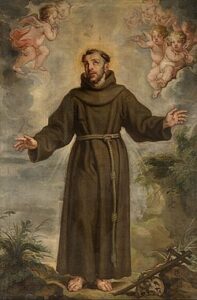 This month the front page of the Devon Dispatch showed the blessing of animals on the feast day of St. Francis of Assisi (October 4). We, at Holy Name, and churches within the liturgical traditions, also celebrate the feast day of this loveable and eccentric man, a creation mystic and founder of the Franciscan Order, with the blessing of animals. This service has a long standing in the Church, and serves to remind us that we are, as humans, only part of creation and are dependent, and interdependent, on the carefully structured biosphere in which we live. This service and Easter Vigil combine to remind us that Jesus, the Christ of God, died for the life of the world, all of it (John 3:16-17). If we honour that death we cannot but care for ecology and the footprint, in current jargonese, that we leave on the earth.
We seem to have lost the honouring of creation that was part of earlier societies. The recognition that the earth and its people are to live in balance begins, for Judeo-Christianity, in the stories of creation. The two Genesis stories have been used and abused, melded, and used as a rationale for power and control of the land/earth, and of women. In the original text the wordplays are cogent and even amusing. The primary theme, in both, is a world created in harmony for relationship. In the tellings, the “creatures” are human forebears and are created to care for the earth. The whole concept of subduing it, and having dominion over it, has been, and continues to be, a problem. I commend to you the work of the Hebrew scholar, Dr. Phyllis Tribble, God and the Rhetoric of Sexuality (1978). It is dated—but still a classic.
The message we are receiving in this day is that the world may well return to primordial chaos—if we do not make some serious changes in our lives and lifestyles. This has been very much on my mind of late, as the election focus has become the economy. It is easy, and perhaps convenient, for people to extrapolate from this that the environment is of secondary importance to jobs and the survival of financial institutions. However, if we do not have biodiversity, that is—the balance of life forms in nature, it is unclear where the future will take us. The economy, therefore, though important, is not the primary concern. The survival of species is!
There are a shocking number of species on the endangered list, and this despite a resistance to listing species in crisis. Apparently the grizzly bear population is less than half of the numbers needed to survive. Nothing is being done. An expert was imported in to evaluate “the problem” and his advice included the closing of logging and mining roads no longer used by industry. The human “footprint” on, and in, wildlife areas makes wilderness and protected areas a moot point.
On phoning environment and wildlife people, I heard frustration and cynicism regarding any will by governments to act proactively. This is evident even in the terms used to describe endangered species. To check out the federal listings you can go to the Government of Canada website and type in cosewic, an acronym. I asked about the recent shooting of bears, most specifically the female grizzly who killed a man. She had three cubs and initial news suggested that these cubs, too, would be shot. I’m still unclear as to the whole story behind the man’s death and the parent bear being shot. Apparently the cubs have been relocated to the Peace River area, after being tagged. Being relocated outside of the area in which they were taught survival techniques by their mother makes them high risks for not surviving. In light of the critical numbers of grizzly one needs to ask why such a choice was made.
Scripture, throughout time, has been used to—variously—bully, cajole, threaten, guilt, or enlighten people. The text and the context must come together. There is a distinct pattern within holy scripture, that people can trace. The pattern is the stewardship of creation, human responsibility and answerability, and acting for those least able to defend themselves (Mt. 25:31-46). This would include the ones St. Francis called “my little brothers and sister”, the birds, bees, and animals. He did not allow any live tree to be cut in its entirety, because Jesus had died “on a tree”. He walked gently over stones because Christ was spoken of as a rock. Franciscan houses were to grow flowers because Christ held up a lily as an example. Because of Jesus’ use of metaphor and allegory, using things in nature as examples, Francis believed that God loved all that was created and that all creation was to be honoured and celebrated. He walked gently on the earth, believing himself to be both stranger and sojourner, a guest in a world created good.
_____________________________________________________________
 One can see, from the above article, that not much has changed. In this crisis moment, worldwide, governments seem to sacrifice environmental protections, thus making the next generations worldspace less secure. The ongoing wars, creating mayhem generally, add yet more pollution, the death of creatures, and generations of poisonous waste and land mines to clear up.
The appearance of a cave-in to/for yet another pipeline from Alberta to B.C. And possible, likely probable, destruction of land habitat, and old growth forest, coast lines, is appalling. It may be a silencing response to a loud minority in Alberta but, if actively pursued, it is just one more domino falling for environmental protections and the further undermining of the Paris Accord — and by Canada.
First Sunday of Advent 2025 (Year A)
Readings
 First Reading: Isaiah 1:1-5
Psalm 22:1-2, 4-9
Second Reading: Romans 13:11-14
Holy Gospel: Matthew 24:37-44
Hymns
●Hymn as 1st Advent Candle is lit (1st verse only): “Lord How Shall I Meet You (Lutheran Book of Worship #23)
●Hymn of the Day: “Christ the Healer We Have Come” (Lutheran Book of Worship #360)
●Offertory: “For the Bread That You Have Broken (Lutheran Book of Worship #200)
●Post Communion Hymn: “Your Kingdom Come” (Lutheran Book of Worship #376)
●Closing Hymn: “The Church’s One Foundation (Lutheran Book of Worship #369)
All are welcome always.
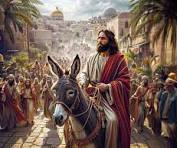
The traditional reading for the 1st Sunday of Advent is that of Jesus’ entry into Jerusalem on a donkey, a beast of burden rather than a mule of war and pomp. This serves to remind us of Palm Sunday, a Cross to come, and Easter. This Jesus is the one whose birth we recall, the long-awaited Coming One, and of the Parousia, the future Advent, His Second Coming. These recollections preceed Christmas so that we remember the fulness of what we will be celebrating. Jesus would be called the Prince of Shalom, the Prince of Peace. The readings and psalms chosen for the Season of Advent repeatedly counsel us to be both patient, and active, in our waiting and watching. It is not always easy to be patient, certainly at this time in our world, a time so lacking in peace, with so much that seems tenuous, insubstantial, and unstable worldwide. Yet, this season marks a new beginning for the Church Year, a time out of time, a closed season, for refocusing our lives so that we are true Church, the People of God, who participate in the bringing in of that peace. The prophet Isaiah spoke for God, saying,
If you do away with the yoke, the clenched fist, the wicked word, if you give food to the hungry and relief to the oppressed, your light will rise in the darkness, and your shadow become like noon. Yahweh will guide you, giving you relief in barren places…. You will rebuild the ancient ruins, build up on the old foundations. You will be called Breach Mender, Restorer of ruined homes.
(Isaiah 58:10-11, 12. See also Is. 61:4)
Jesus’ teachings reiterate this call to shalom living. One meaningful to me is Matthew 25:31-46 where Jesus speaks to how all, including the least ones, must be cared for. The call, then and now, is to be people of shalom, a peace that is neither airy-fairy pseudo spiritualized “peace,” but an all embracing radical peace alluded to, and trumpeted by prophets, and stated clearly by our Lord. This includes an all encompassing justice. It speaks to a reversal of fortunes and a transformation of nature; it is counter cultural in so many ways and points to a completeness that we seek but fear to risk embracing. Shalom is not simply the “hello and goodbye” as so many use this word. It is all encompassing, all embracing justice.
It rejects shackling sojourners and strangers, so-called aliens. It requires of us empathy and action. It is again and again a call to live, and to keep alive, the peace of shalom, the life of agape love that is the word’s equivalent. We commit ourselves to this peace in the Eucharistic sharing of the peace.
We wait in hope and belief, strengthened by the faith given, however stressed or stretched this hope is, not always appreciating, or comprehending, this waiting that demands that we participate in the bringing in of light that will end darknesses and repel those darker shadows that seem to rise in this our time, some inherited from yesteryears.
So, at times we will wait in tentative readiness but aroused, in this holy season, led to pause to recall a manger but also a cross.
We have journeyed from the highest holy days of Easter, through the seasons of the Church Year, to this moment, with the clamour of “the season” before it actually exists, with Black Friday and Boxing Week, the dissonance of militant secularism set against the rampant religiosity of some, who unfortunately cause some others to generalize and name Christianity as bizarre, strange, odd — and with cause. Within this tangle of perspectives we are also caught up in the rise of authoritarianism’s confusion, fear and financial disarray. Unfortunately the loudest example, to the south of us, uses faulted religiosity to further empower this ilk of authoritarianism and suborn truth.
My brother sent me a book called Jesus and John Wayne, depressingly related to the misuse of things sacred. It is important to read such critiques, though I disagree with the author’s use of “Evangelical” for “fundamentalist”, the latter may use the phrase but are of another mind. Fundamentalism is spread across traditions. In years past the book Stealing Jesus addressed this topic as well. Jesus warned of all who usurp the truth and lead others astray.
Our Lord says to us “Keep awake and aware for goodness sake!” A paraphrase but accurate still. Why? Lest you be swayed by what is wrongly said or taught, or parameters set for employment that you know to be wrong. Jesus said to Peter, at one point, “Get behind me Satan! You are an obstacle in my path” (Mt.16:23( and he called miss-teachers “blind guides.”
In the midst of the confusion of our time, some have embraced militant beliefs, or joined odd cults, acting much as the ultra orthodox sect, the Essenes, in Jesus time. They prepared for a Messiah in their image and likeness, one who espoused their view of reality. They therefore chose to believe in two Messiahs who would cover the basics of their perspectives of war and peace. Though they did not speak of “peace through strength,” or the “Pax Romana,” they sought to defeat, or exclude, not Rome only, but others who thought differently.
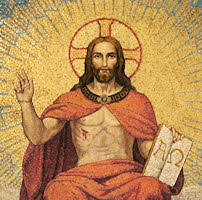 We who believe Jesus to be Messiah, the Christ, the Chosen One of God, the baby born of Mary, and parented by Joseph, have another vision, a different perspective of the One who will come again. Despite credal affirmations of this Human Son and Son of God, it seems that it has been easy, for some, to believe in the kind of militant Messiah of the Essenes, with an add-on that all sorts of freedom or license will be achieved for themselves.
It is within this incapacity to attend to what is important and real, that the urgency of Advent arrives. We are reminded that we must not sleep through God’s signals of alarm, to choose apathy, or like a brave sign holder in Portland Oregon, whose sign said, “Portland will outlive him” (Donald Trump). The sign, however brave, may be not be the case. When evil is allowed to run rampant and people are lulled by false promises or fear, or a belief in future normalcy, there is room left, as with Hitler, to perpetuate the beliefs — either believed or merely accepted to gain power. We have seen this to be true. What appeared as ludicrous became acceptable, and has a large following within authoritarian regimes. The way it begins is described in The Clowns of God by Morris West. He calls the miasma of evil as upfront and in daylight, yet some somehow cannot “see it.” The Noonday Evil exists to the south of us and has tainted the world, perhaps irrevocably. Yet there are Christian disciples among people too fearful to name what is, and is happening.
If we are casual with our todays, too fearful to speak truth to power, how are we able to be careful of, and watchful for, our tomorrow’s? To be people of shalom?
It is such concerns that are expressed in today’s Gospel pericope (Mt. 24:37-44). If you are aware of the potential for a break and entry, Jesus is quoted as saying, you prepare yourself accordingly. This is also true of the Parousia. We are to watch and wait (an active verb), which means not just navel gazing, but being an active participant in shalom. Jesus wept over the inhabitants of Jerusalem because, the writer of Luke’s Gospel relates, they did not recognize the things that make for peace, for shalom. Shalom places us at the very centre of life, requiring our participation and commitment to all who struggle in life and for life.
At this time of year, in this climate, and the political climate worldwide, want becomes more evident. Here, elsewhere, in Ukraine and Sudan, in the shameful treatment of the people of Gaza, there is little evidence of the things that make for peace. Shalom seeks to end wars, seeks justice, provides adequate shelter and sufficient food, ends the many violences we hear of daily and does not permit us to ignore all of this, thereby drawing us to stand and be counted as People of Shalom.
We can shudder at the horrendous story of what happened to Gisèle Pelicot, her daughter and daughters-in-law, and the 40+ young girls and women caught in the Epstein web. Such things take place because some choose to participate and others look the other way. In our common confession we confess what we have done and those things which we choose to leave undone. The latter is the greatest sin, because it is a choice. Without a community, of even two or three persons, who will hold our hands in dark or rocky times, we lose sight of what shalom is all about. It is not true that one can be good, or to know good, in isolation. “Common sense,” so-called, describes a general and accepted code for living in community, or country. Our baptisms lead us to be part of the greater Christian Community. The Charter of Rights, if honoured, rejects much of which seems acceptable in much of our nation. Be awake and aware.
Dr. Martin Luther, centuries ago, spoke of the true Church within the Church, those who held, and hold, to our Lord’s teachings and hold to the doctrines drawn from those teachings over centuries. We need to remember that Jesus spoke of some perceived as “outsiders” who “get it,” despite not being considered part of the “chosen ones.” In the story of the Good Samaritan (Lk. 10:29-37), the story of the tax collector Zacchaeus (Lk. 19:1-10), and other equally pointed teachings, we are taught that God’s perspectives to do not necessarily agree with our worldview. Nor can one skim texts, to proof text, support the lies, as is often being done. There is a final answerability.
And so, we begin this Advent journey recognizing that it is, and can be for us, a new beginning for intentional changes, not just New Year’s wishes. We pray and ask for all that was created good, building on old foundations. Amen.
Boxing Day, Boxing Week, Boxing Days in June, etc., etc.
The way in which businesses use and abuse Saint Stephen’s Day and its intent, is aggravating. Now, “Boxing Day” extends to many days, even weeks, without knowledge of its story or the name of the Saint who’s feast it is.
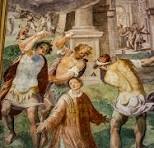 The story of Boxing Day describes the co-opting of Saint Stephen’s Feast Day, December 26, within the greater twelve day Feast of Christmas, the second greatest feast in Christendom. This seems to have begun in Victorian times, based on the story of the nameday. Saint Stephen, deacon, and the first recorded Christian martyr. The duty of deacons, then, was to ensure the well-being of the community, bringing food and essentials to the poor, widows orphans, and ensuring their shelter. The Christmas song “Good King Wenceslaus,” is written honouring Wenceslos, Duke of Bavaria, and martyr, for similar reasons as St. Stephen was stoned. He worked to better the lot of the poor, also working for the religious and educational improvement of his people. This, in part, upset the pagan faction led by his brother. But his actions resemble the life of early deacons.
In Victorian times, on St. Stephen’s Day, apparently, children of comfortable homes were encouraged to sort older toys, having been given new ones, to bring to the poor, or have given to the poor, while their parents gave charitably, a lesson in civic responsibility. The thread is obvious.
 The merchants of the day decided that Saint Stephen’s day was a good day to take “boxes” of fine wine, meats, etc., to the rich who ordered quantities of such goods from them. Hence Boxing Day evolved, turning the day of charity into a day of gratuities for the wealthy.
Many do not know that there are other, and meaningful, feasts within the greater feast of Christmas. Trees go up in early November, by many, and come down before Twelfth Night January 5th) — still Christmas. It is a pity that the feast of Saint Stephen is not better understood, as is the greater story of Christmas itself.

***********************************************************************************************
The Epiphany
Readings: 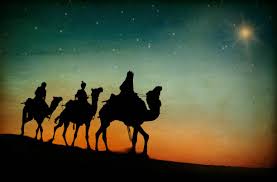
- 1st Reading: Isaiah 60:1-6
- Psalm: Psalm 72:1-19
- 2nd Reading: Ephesians 3:2-3a, 5-6
- Gospel: Matthew 2:1-12
Hymns:
- “AsWith Gladness Those of Old”
- “A Stable Lamp Is Lighted” (See words below.)
- “Twas In the Moon of Wintertime” (Offertory) (See words below.)
- “Brightest and Best of the Stars of the Morning” (Post Post Communion Canticle)
- “The First Noel” (Final Hymn)
A Stable Lamp Is Lighted
- Text: Richard Wilbur (1921-2017)
- Tune: Paulette Tollefson, b. 1950. Alt. tune: “Sing to the Lord of Harvest” (LBW #412)
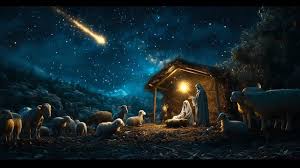
- 1. A stable lamp is lighted
- Whose glow shall wake the sky;
- The stars shall bend their voices,
- And ev’ry stone shall cry.
- And ev’ry stone shall cry,
- and straw like gold shall shine;
- A barn shall harbour heaven,
- A stall become a shrine.
- 2. This child through David’s city
- Shall ride in triumph by;
- The palm shall strew its branches,
- And ev’ry stone shall cry.
- And ev’ry stone shall cry,
- Though heavy, dull, and dumb.
- And lie within the roadway
- To pave his kingdom come.
3. Yet he shall be forsaken- And yielded up to die;
- The sky shall groan and darken,
- And ev’ry stone shall cry.
- And ev’ry stone shall cry
- For stony [human hearts ]
- God’s blood upon the spearhead,
- God’s love refused again.
- 4. But now, as at the ending,
- The low is lifted high;
- The stars shall bend their voices,
- And ev’ry stone shall cry.
- And ev’ry stone shall cry
- In praises of the child
- By whose descent among us
- The worlds are reconciled.

’Twas in the Moon of Wintertime
Text: Rev. Father Jean de Brébeuf, Martyr and Saint (1593-1649);
Tune: French folk tune, 16th cent.
- 1. ’Twas in the moon of winter time when all birds had fled,
- That mighty Gitchi Manitou sent angel choirs instead;
- Before their light the stars grew dim,
- And wandering hunters heard the hymn:
- Jesus your king is born!
- Jesus is born, in excelsis gloria!
- 2. Within a lodge of broken bark the tender babe was found;
- A ragged robe of rabbit skin enwrapped his beauty round;
- But as the hunter braves drew nigh,,
- The angel song rang loud and high;
- Jesus your king is born!
- Jesus is born, in excelsis gloria!
- 3. The earliest moon of winter time is not so round and fair
- As was the ring of glory on the helpless infant there.
- Chiefs from far before him knelt
- With gifts of fox and beaver pelt.
- Jesus your king is born!
- Jesus is born, in excelsis gloria!
- 4. Oh children of the forest free, children of Manitou;
- The holy child of earth and heaven is born today for you.
- Come, kneel before the radiant boy,
- Who brings you beauty, peace, and joy.
- Jesus your king is born!
- Jesus is born, in excelsis gloria!


****************************
Meditation on Epiphany
Epiphany is a Season, post the 12 days of Christmastide, in which we read, and hear, of how the Christ of God was revealed to the world of that time, and how this is relatable to those who honour these remembrances in our present; and will in times to come.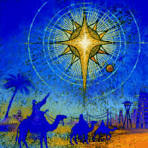
The Season of Epiphany begins on the 6th of January, in western rite Christendom. It was held as one of the two most important feasts within the Eastern Church, first of all, long before the Feast of Christmas became popularized. Jesus’ ministry, and his death and resurrection, were considered to be the primary focus, not the beautiful tellings of his birth, as related in Luke’s Gospel. Easter was, and still is, the highest and holiest Season (50 days). Epiphany can be seen to extend to the Transfiguration of our Lord,* which is, in and of itself, an Epiphany, incorporating Sundays of “The Showing Forth,” prior to Lent.
This year of our Lord, 2026, we celebrate the Epiphany several days early, recognizing that, while it is yet Christmas until 12th Night, persons in this day do not attend daily or midweek services as in earlier years,. Therefore it has become a moveable feast because of its importance. Orthodox Christians, using a different calendar, celebrate Christmas Eve as we enter the season of Epiphany. That gives some of us reason to celebrate a merged time to honour both traditions as believers together.
The Matthean telling of eastern Magi, likely Persian, is beautifully told in the book, The Other Wiseman, by Van Dyke. Magius were not kings, but a company of high caste intellectuals; covering medical, scientific, astrological, and priestly functions, within their society. The scripture (Matthew 2:1-12) does not name them kings or offer a number of persons; nor does it say how many gifts were brought.
On entering the house they saw the child with Mary, His mother, and they knelt to pay Him homage. Then, opening their treasure chests, they offered Him gifts of gold frankincense and myrrh…. (Matthew 2:11)
Scripture does not offer us the myths, however lovely, created over centuries, of the Magius. They were not in a stable, not kings, not three. Their search, having lost sight of the star, led them to Herod. The subsequent telling of the slaughter of the innocents (Matthew 2:13-18) came about because of that detour. Surely the allusion to losing sight of the star is a pointed one for us, and what it says of whom one should deal with and trust. We must not put any trust in tyrants. We are not always given, or perhaps choose to listen to, the signs, such as the vision given the Magi to avoid Herod.
The choices made by the Magi, told in brief, can be heard as a cautionary telling, reminding God’s people that we must be wary of the Herods of our world in all eras, and make critical choices accordingly.
Current usage of the word “epiphany” was apparently begun by James Joyce, defining Epiphany as a personal moment of “revelation, insight, or clarification.” This is underwhelming in light of the Epiphany that first of all revealed that Jesus, the Christ of God, would embrace the world; not just the world of the day, nor the Jewish community into which he was born, nor Christianity’s evolution. It reveals God’s greater promise which Jesus Himself, as human child and man, must learn to accept. The whole of the gospel telling enables us to recognize that our baptisms place us on a similar journey, as seekers; and bearers of shalom to all peoples, and the universe that echoed the gladness of his birth.
Amen.
* See footnote 23 in Commentary on the Lutheran Book of Worship, p. 216. The footnote reads: “In the Greek and Roman world, epiphaneia or adventus was an official state visit by a king or an emperor to a city of his realm, especially on an occasion when he would show himself publicly to the people. The term was also (perhaps originally used for the manifestation or intervention of a god. Epiphaneia is used of Christ in the New Testament in John 2:11, 2 Tim. 1:10, Titus 2:11 and3:14. James Joyce in Stephen Hero defines “epiphany” as a “sudden spiritual manifestation” when the “soul” or “whatness” of an object “leaps to us from the vestment of appearance.” From Joyce’s use of the term has come to be employed in literary criticism to describe a moment of revelation, insight, or clarification.
********************************************************************************************
A Letter Regarding Greeenland



January 16, 2026
To our dear siblings in Christ,
As the national bishops of Lutheran churches in the United States, Canada and Denmark, we wish to send the Greenlandic people our full support in an unusually difficult situation. We pray for and encourage our own congregations and people to pray for and stand with Greenland and the Greenlandic people who want to maintain their independence. We pray for peace and respect between nations.
We unreservedly support the Church of Greenland and Bishop Paneeraq Siegstad Munk, whose statement has been quoted in several media outlets: “This is a question of human rights, dignity, and respecting international laws and treaties. We are a small people, but we are not invisible. Our future is not something to be decided over our heads. We have language, culture, ancestors, children, and a future tied to this place. We are people, not property. Greenland is not land to be bought. It is our home and it is not for sale” (Christian News, Jan. 14). The Church of Greenland works closely with dioceses in Denmark and plays an active role in international affairs as a member of the World Council of Churches, the Lutheran World Federation and other organizations. We wish that this close cooperation will continue and bring joy and benefit to the people of Greenland.
We invite you to write to your elected leaders and tell them to respect the independence of Greenland and the Greenlandic people.
In Christ,
The Rev. Dr. Larry Kochendorfer, National Bishop Evangelical Lutheran Church in Canada
The Rev. Yehiel Curry, Presiding Bishop Evangelical Lutheran Church in America
Rt. Revd. Henrik Stubkjær, Bishop of Viborg Evangelical Lutheran Church in Denmark